Buckthorn on Your Minnesota Property: How to Identify It and Actually Get Rid of It (Step-by-Step)
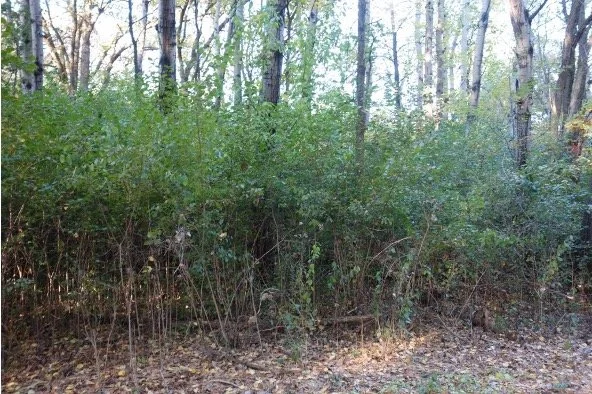
If you own woods, old pasture edges, creek corridors, or a “mixed brush” area anywhere in Minnesota and the Great Lakes, odds are you’ve met buckthorn—whether you knew it or not. Buckthorn often looks like “just another shrub,” but it’s one of the most common plants behind solid green thickets, bare forest floors, and stalled regeneration in hardwood and mixed forests.
The good news: you can control it. The key is using the right method for the plant size, doing it at the right time of year, and planning for follow-up (because the seedbank is real).
Below is a landowner-friendly playbook you can follow.
What buckthorn is (and why you should care)
In Minnesota, “buckthorn” usually means:
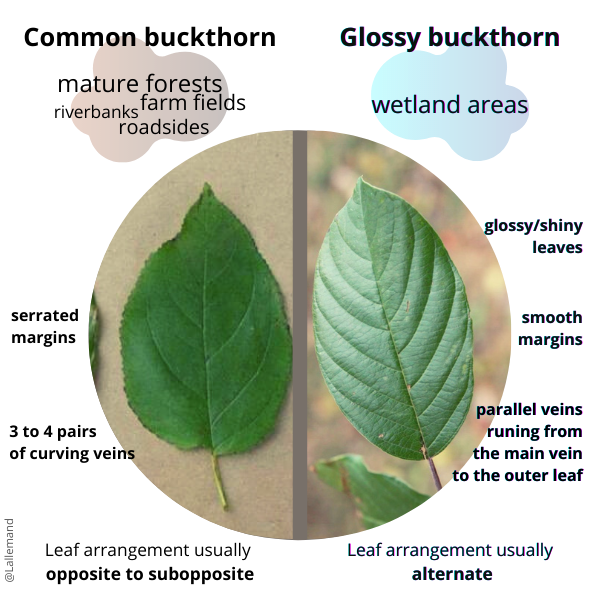
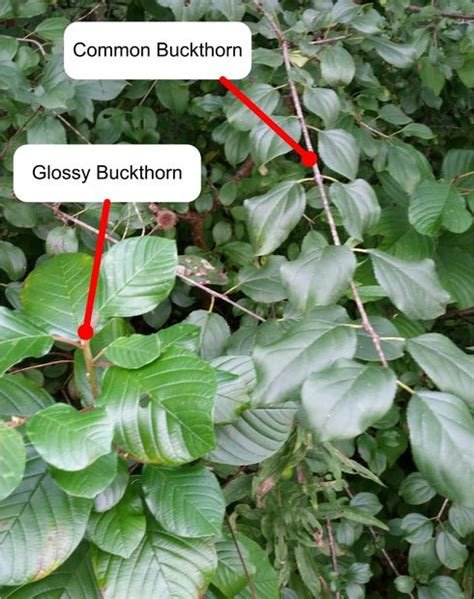
Common buckthorn (Rhamnus cathartica) — often uplands/woods edges
Glossy buckthorn (Frangula alnus) — often wetter sites, lowlands, swamp edges
Both are invasive shrubs/small trees that spread aggressively and can dominate understories. They:
Outcompete native shrubs and tree seedlings, reducing diversity and regeneration.
Create dense shade and a “green wall” that changes how your woods function.
Produce lots of berries that birds eat and spread widely.
Quick ID: how to tell buckthorn from “normal brush”
You do not need to be a botanist—use a few high-confidence traits.
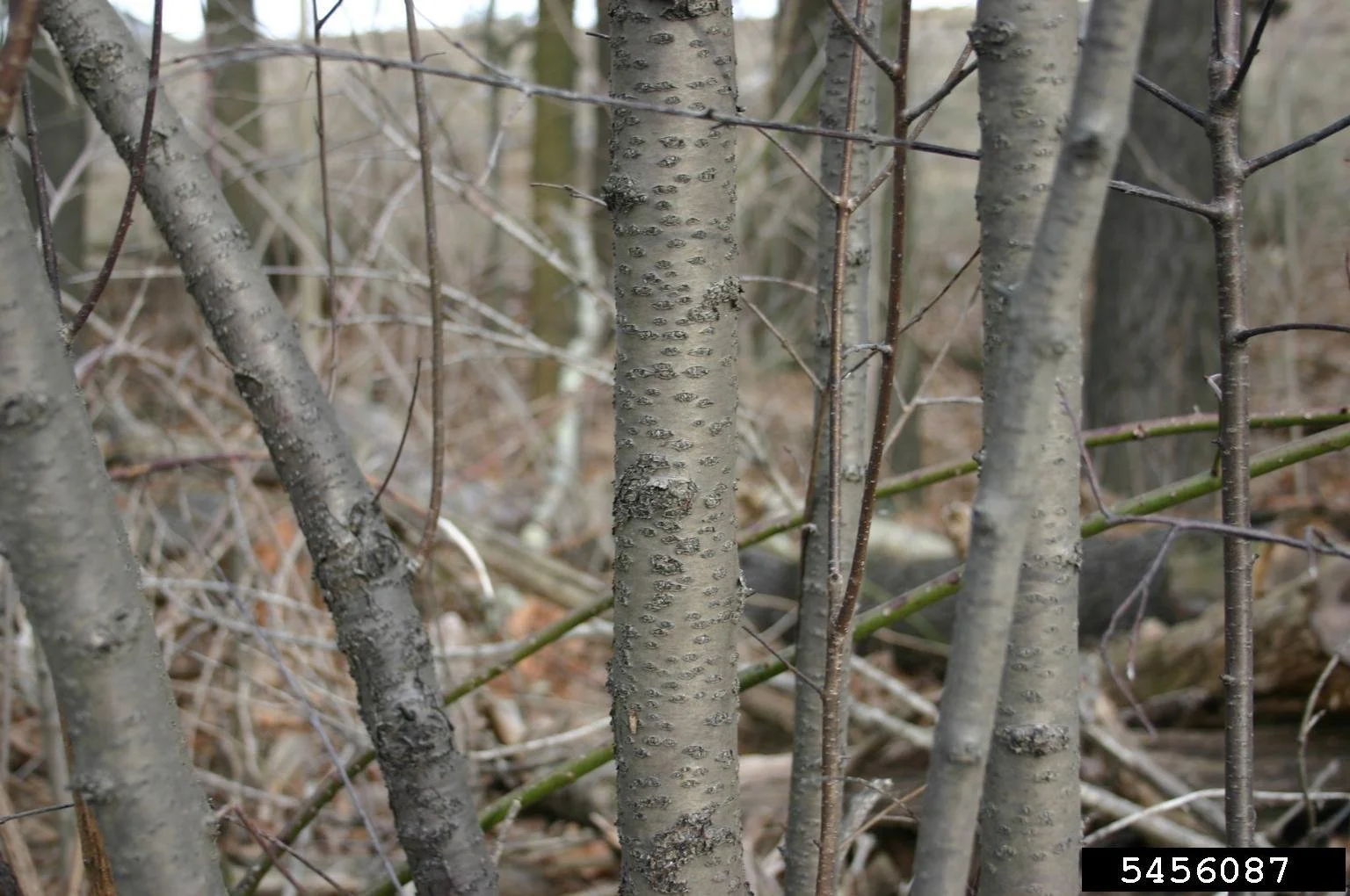
Leaves and branches
Leaves often appear opposite or nearly opposite (especially common buckthorn).
Curving veins: look for several pairs of veins that curve toward the leaf tip (common buckthorn is famous for this).
Late-season green: buckthorn frequently holds leaves later in fall than many natives—making it easier to spot during hunting season and after leaf drop. (This timing advantage is echoed in MN guidance.)
Twigs and tips (common buckthorn)
Common buckthorn may show a small “thorn-like” tip at the end of some twigs (not always on every twig, but common enough to help).
Berries
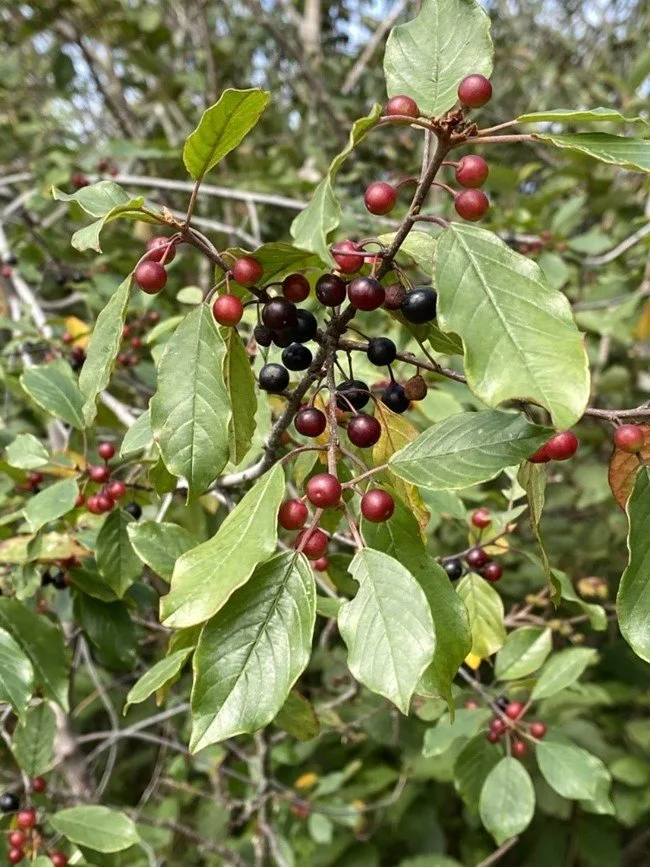
Clusters of berries that turn dark/purple-black when ripe (glossy buckthorn can show mixed ripening stages on the same plant).
If you’re unsure, take clear photos of:
a leaf on the stem, 2) the twig tip, 3) the berries (if present), and compare against MN DNR / UMN resources.
Before you cut anything: pick a goal (this saves you money and time)
Choose one of these “owner goals”:
Stop the spread first (Containment): prioritize berry-producing plants (especially large females), then work inward.
Open up access and visibility: clear trails/edges first, then expand.
Restore a stand: remove buckthorn in priority areas, then re-establish natives to resist reinvasion.
If you do nothing else, do this: remove seed sources and prevent new berries.
The best times of year to work buckthorn in Minnesota
Timing matters because you’re trying to kill the root system, not just knock the top off.
For cut-stump + herbicide, Minnesota DNR notes the most effective timing is late summer through fall, and advises avoiding May and June when herbicide is less effective for stump treatment.
Fall is also practical because buckthorn often stays green later, helping you find it among leafless natives.
Winter work is great for access and comfort (no bugs, easier walking), but plan your herbicide method around label direction and site conditions.
Tools & supplies checklist (what you’ll actually use)
Cutting / pulling tools
Brush cutter with blade (dense sapling patches)
Chainsaw (thick stems; only if trained and equipped)
Weed wrench / puller tool (excellent for stems you can physically lever out)
Herbicide application tools
Stump dauber / foam brush / paintbrush (best for cut stumps)
Small hand sprayer (for basal bark or limited foliar where appropriate)
Marking dye (optional but highly recommended so you can see coverage)
PPE (don’t skip)
Eye protection, gloves, long sleeves, sturdy boots
If spraying: follow the herbicide label for required PPE (often includes chemical-resistant gloves and eye protection)
Cleanup & disposal
Tarp or sled for hauling berry-laden brush
Chip options / burn pile options where legal and safe
Control methods that work (by plant size)
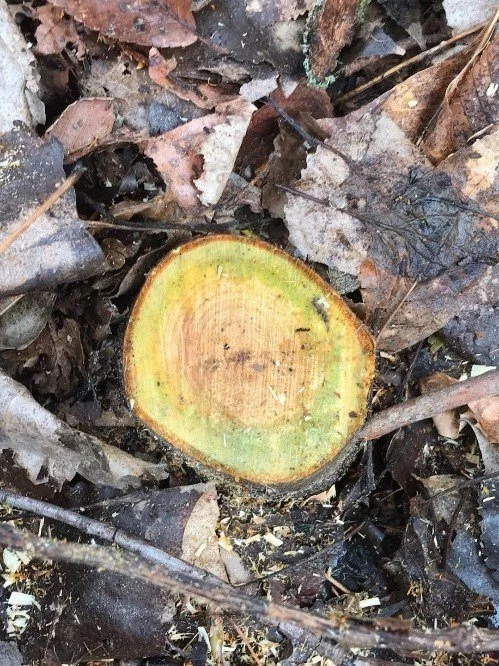
A) Seedlings (ankle-high to knee-high)
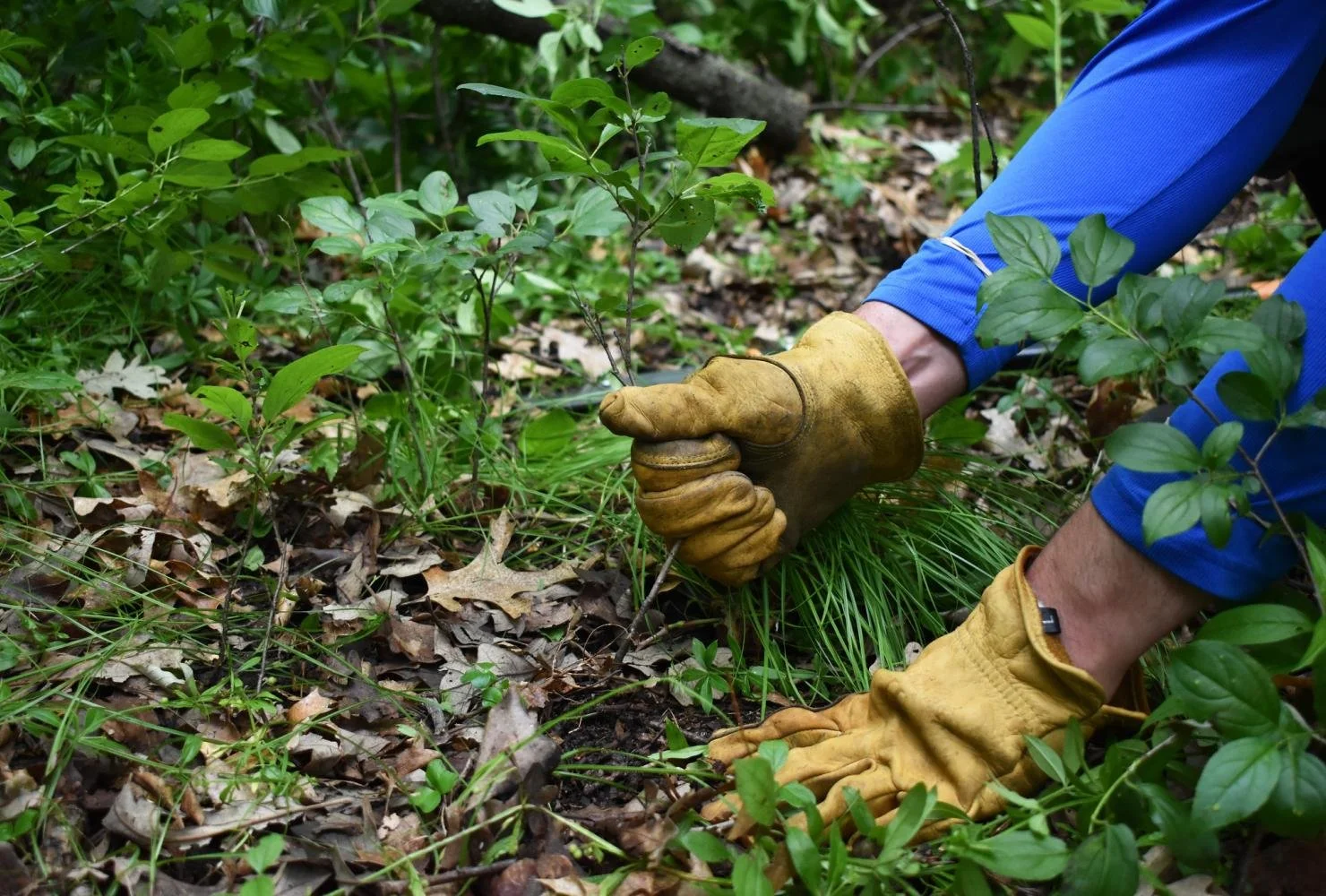
Best options
Hand pull when soil is moist (spring/fall after rain).
For carpets of seedlings, focus on repeated pulling and/or targeted treatment rather than trying to “win in one day.”
Pro tip: Pulling is most efficient when you’re removing hundreds of small plants quickly. Keep it simple.
B) Saplings and shrubs (thumb-sized up to a few inches)
You have two go-to methods:
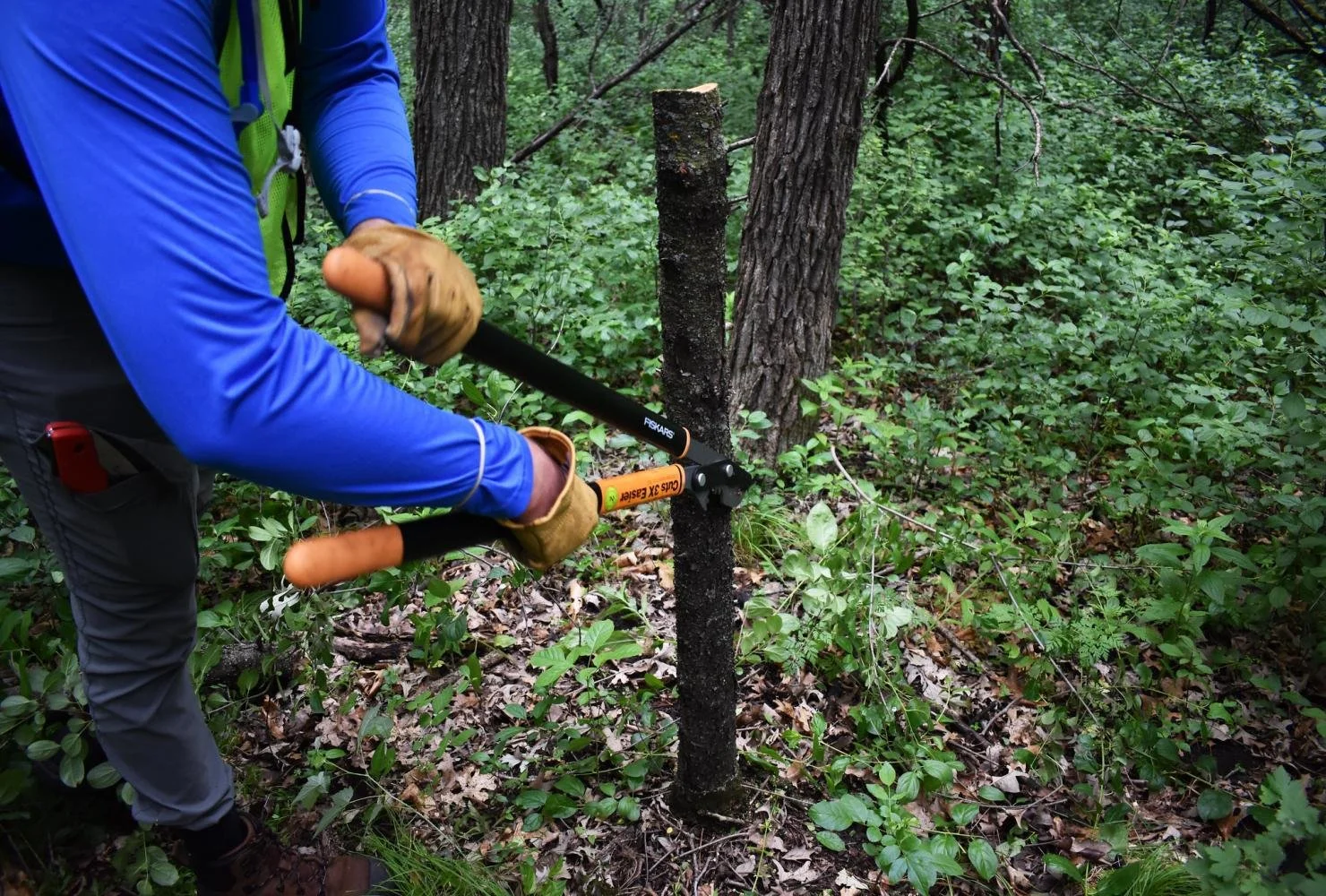
Option 1: Cut-stump treatment (high success, very targeted)
Cut the stem close to the ground.
Treat the stump soon after cutting—MN DNR’s buckthorn guidance emphasizes treating cut stumps promptly (they note treatment should be within a short window, and that application should target the outer growth rings near the bark).
Apply herbicide to the cambium ring (the living ring just inside the bark)—that’s where uptake happens.
Herbicide actives commonly used (examples depend on label)
Glyphosate (non-selective)
Triclopyr (selective for broadleaf/woody plants; comes in different formulations)
Why this works: you’re using minimal chemical, directly on the plant, with strong kill rates.
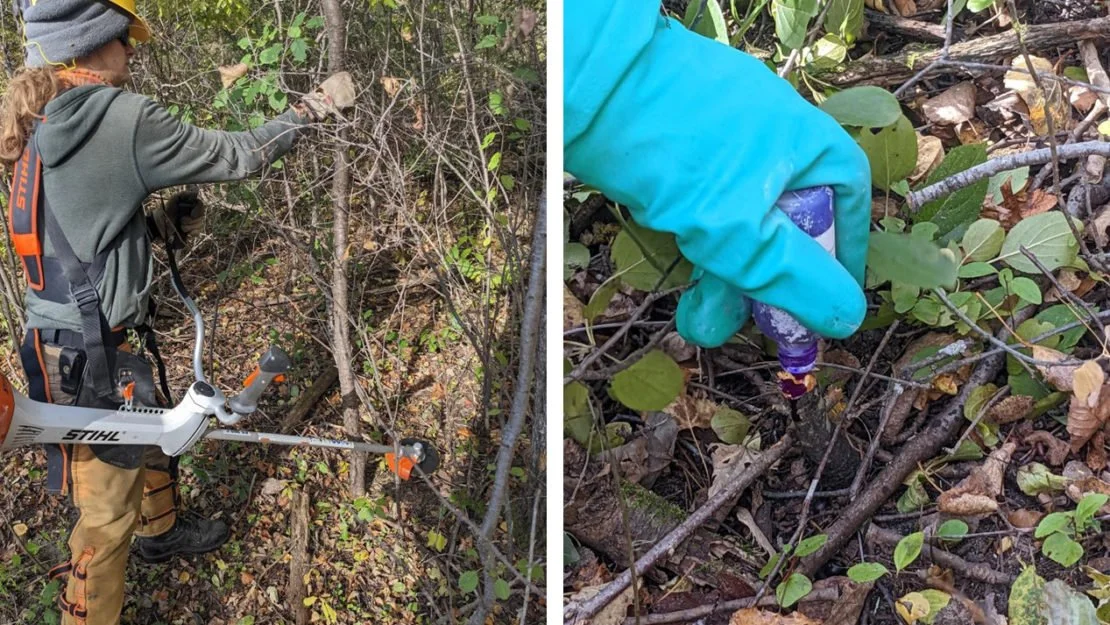
Option 2: Basal bark treatment (fast when you have many stems)
Basal bark means applying herbicide around the lower stem/bark without cutting first.
University of Minnesota Extension describes basal bark treatment as an option and notes it works well on stems up to about 5 inches in diameter, applying from ground level up to roughly 18 inches on the stem.
This method is popular when you have a lot of medium-sized stems and want to move quickly.
C) Large buckthorn (thick stems / small-tree sized) and dense thickets
Do not just chainsaw these down and walk away—buckthorn loves that.
Use:
Cut-stump + herbicide on every cut stem, working systematically.
In dense thickets, consider staging:
Remove seed producers first
Create access lanes
Then clear blocks
Wisconsin DNR guidance on invasive plant control also emphasizes that cutting alone usually isn’t enough and highlights basal bark and cut-stump herbicide as core approaches for woody invasives like buckthorn.

Herbicides: what to know
You asked for herbicides, so here’s the straight talk:
Glyphosate is non-selective (it can kill grasses/forbs/seedlings too).
Triclopyr is generally used for woody/broadleaf control and can be a better fit where you’re trying to keep grasses/sedges.
Formulation matters:
Water-based formulations are used differently than oil-based “ester” formulations (often used for basal bark or certain cut-stump mixes). Your local Extension/DNR guidance and the product label should drive the exact mix and method.
Two rules that prevent most mistakes
Read and follow the label (it’s the law, and it prevents off-target damage).
Treat only what you cut/spray—avoid broadcast spraying unless you truly know what you’re doing and conditions are right.
If your work is near water or wetlands, use products labeled for that setting and consider hiring a licensed applicator.
Handling cut brush and berries (how to avoid re-seeding your own property)
Buckthorn berries can keep spreading your problem if you drag them through the woods.
University of Minnesota Extension advises removing berries / reproductive material by chipping, burning, or hauling, and warns that transporting can spread seed if you’re not careful.
Practical approach:
If it has berries: bag it, tarp it, or move it carefully to disposal.
If it’s non-reproductive woody debris: you can often leave it in place to reduce erosion and browsing pressure (site-dependent).
The part everyone skips: follow-up (this is where success happens)
Expect resprouts and new seedlings for a few years. That’s normal.
A solid follow-up plan:
Year 1: initial removal + treat stumps + pull seedlings next spring/fall
Year 2: patrol and spot-treat (especially edges, trails, and bird perches)
Year 3: mop-up + reinforce with natives
If you remove buckthorn and leave bare ground + light, you can invite the next invasive wave (garlic mustard, honeysuckle, reed canarygrass depending on site). Restoration doesn’t have to be fancy—sometimes it’s simply:
letting natives rebound,
protecting regeneration from deer browse,
or adding a few shade-tolerant natives in openings.
A simple “Weekend Buckthorn Plan” (copy/paste)
Friday night (30 minutes)
Walk your property edge/woods trails.
Flag the biggest berry producers and densest patches - I like hi-vis pink/orange ribbon as it stands out the best!
Saturday
Cut + treat stumps in priority zones (start with seed producers).
Stack/contain berry brush separately.
Sunday
Pull seedlings and small plants in the cleared zone.
Do a final walk to confirm every cut stump got treated.
Next fall
Repeat in the next zone outward.
When to hire help
Consider a contractor if:
You have acres of dense thickets,
you’re near wetlands and need precise herbicide compliance,
or you’re using chainsaws/brush cutters beyond your comfort level.
A good contractor will talk about: timing, follow-up, and protecting native regeneration—not just “we’ll clear it.”
Key references
University of Minnesota Extension guidance on buckthorn control and herbicide method options
Wisconsin DNR invasive plant control (herbicide methods for woody invasives)